MENU ●●●
.jpg)
Kenneth LaBlanc is a high school junior and a resident of Bienville Basin Apartments. He serves as a Teen Ambassador and intern at HRI Community Resources, Inc., where he supports resident events, outreach initiatives, and the community garden. The experience has provided more than early job exposure. His earnings have allowed him to purchase school supplies, buy his own shoes, save for emergencies, and ease financial pressure at home.
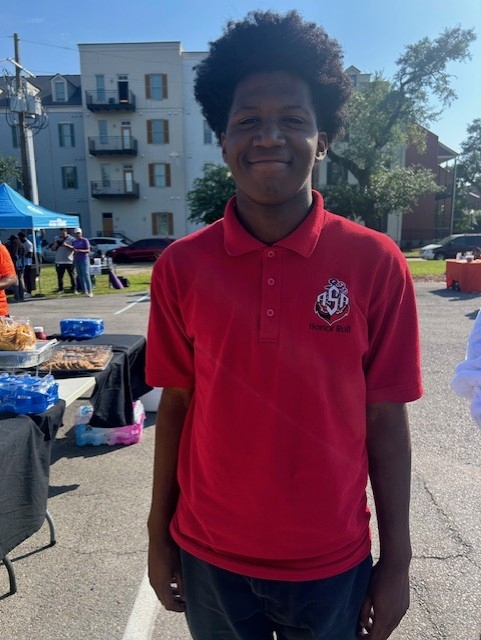
These are small victories on paper. In real life, they are transformational.
Kenneth’s story illustrates something affordable housing professionals have long understood: stable housing is a catalytic platform. When families are not forced to move repeatedly or stretch beyond their means to cover rent, young people gain the space to focus on education, work, and personal growth.
Bienville Basin stands on land that once held the Iberville Public Housing Development, originally built in 1942. Through a public-private partnership led by HRI Properties and supported by HUD’s Choice Neighborhoods Initiative (CNI), the 23-acre site was reimagined as a vibrant mixed-income, mixed-use neighborhood.
The completed community includes 227 market-rate apartments, 151 workforce housing units, 304 public housing replacement units, and 51 senior housing units. This unit mix reflects a deliberately layered financing strategy that blends public and private capital sources to deliver a true mixed-income community.
The inclusion of market-rate and workforce housing units alongside public housing replacement and senior housing allows the development to leverage multiple funding streams—such as LIHTC equity, HUD programs, and conventional financing—while creating cross-subsidization within the project.
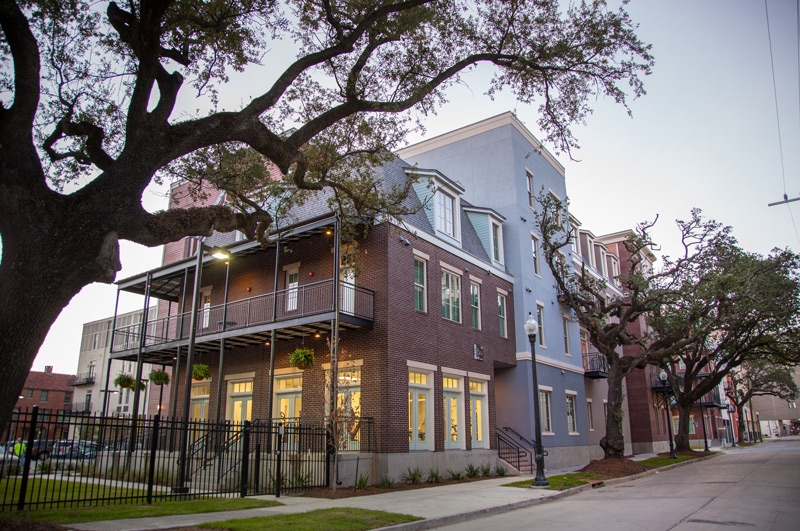
Built for Furthering Opportunity
Beyond housing, Bienville Basin was designed to support quality of life and long-term opportunities. Residents benefit from three fitness centers, a computer learning lab, and an early childhood education center that promotes youth literacy. On-site retail includes a café and yoga studio.
Community rooms and outdoor spaces encourage gathering, with two playgrounds, picnic areas, BBQ grills, and gardens tied to nutrition education. Fiber-optic connectivity provides residents with fast internet and cable services.
The redevelopment effort prioritized resident outcomes. Nearly 85% of former Iberville households enrolled in case management, with 80% achieving positive results. Workforce development programming was launched alongside a Public Safety Enhancement Grant, which contributed to a 29% reduction in crime.
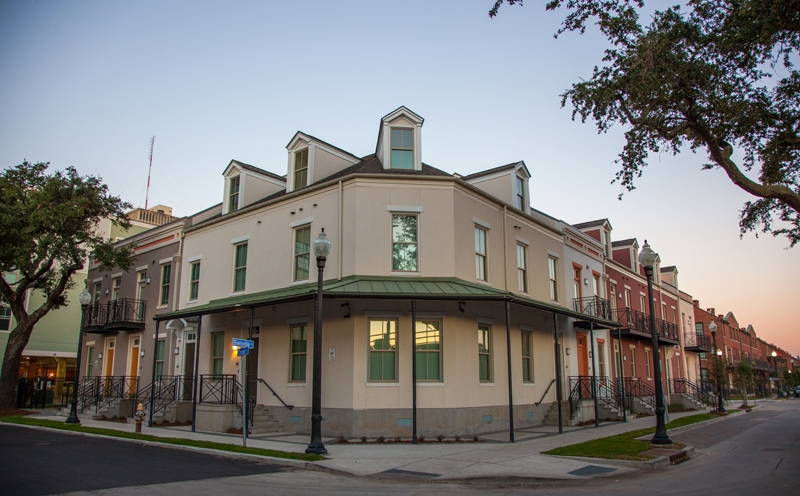
Housing as an Economic Development Strategy
Bienville Basin helped anchor a wave of reinvestment across downtown New Orleans and the surrounding Iberville/Tremé area. The total neighborhood investment reached roughly $800 million, with additional momentum continuing as new projects build on a more stable foundation, including $100M in Rampart Streetcar Line improvements, the $120M Jung Mixed Use Development, and the $47M BioInnovation Center.

“Housing is Economic Development, particularly when it is accomplished on the scale of HUD’s Choice Neighborhoods Program. Bienville Basin has leveraged tremendous investment in the surrounding community and most importantly invested heavily in human capital, bettering the lives of residents,” said Jeff Schwartz, Director of Housing, Community Development, and Special Projects with the City of New Orleans.
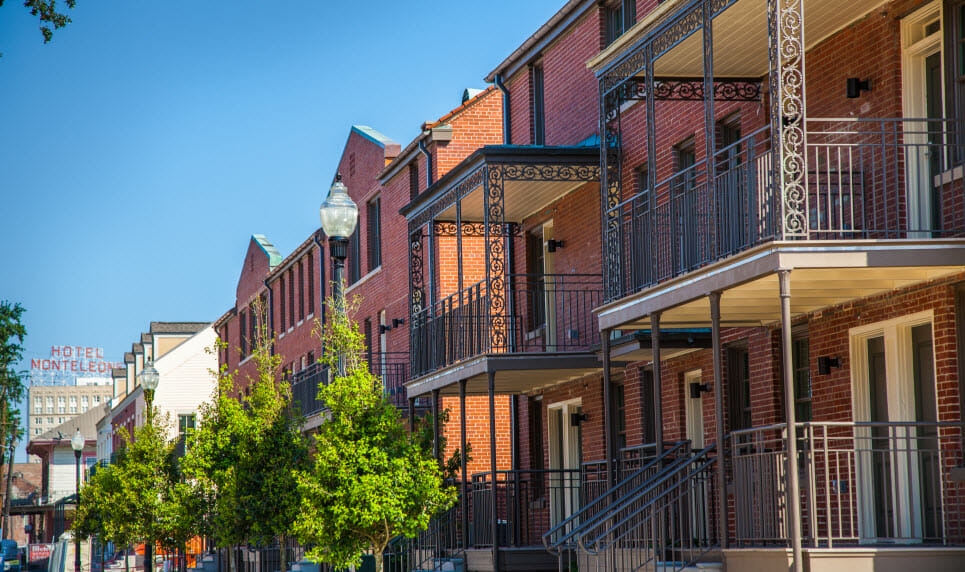
Mixed-income housing developments, like Bienville Basin, often restore market confidence, attract private capital, and reenergize underutilized corridors. By stabilizing residential density and improving neighborhood infrastructure, Bienville Basin helped create the conditions for hospitality, retail, transportation, and cultural projects to move forward.
Economic development metrics tell one side of the story. Residents like Kenneth tell the other.
At the Ribbon Cutting in 2019, Assistant Secretary for the Office of Public and Indian Housing R. Hunter Kurtz said, “Choice Neighborhoods grants focus not only on redeveloping distressed housing, like Iberville, into mixed-income developments, but also on the needs of the residents so their lives can be transformed. Through the work of the Iberville team, 682 housing units have been modernized and former residents now have the opportunity to return home to a revitalized neighborhood. HUD is proud to have been part of the Iberville team.”
The power of this achievement is still benefiting the residents and the community at large today. Because Bienville Basin exists, Kenneth has access to stable housing, workforce exposure, leadership opportunities, income and financial independence, and a stronger sense of belonging. Affordable housing changes trajectories.
.jpg)
Why This Matters for Louisiana
Stories like Kenneth’s underscore a critical truth for policymakers, business leaders, and community stakeholders: Affordable and workforce housing are long-term economic investments. They support workforce stability, educational attainment, reduced displacement, neighborhood revitalization, and private-sector reinvestment
Bienville Basin demonstrates how thoughtful housing development can strengthen both families and local economies. For Kenneth, it meant the ability to work, contribute, and plan ahead. For the neighborhood, it meant renewed vitality.
For Louisiana, it offers a model worth replicating.
LAAHP was founded in 2006 for the purpose of encouraging affordable housing in Louisiana on behalf of its members by advocating sustainable policies and regulations, providing educational opportunities and events, and promoting its members interests.